
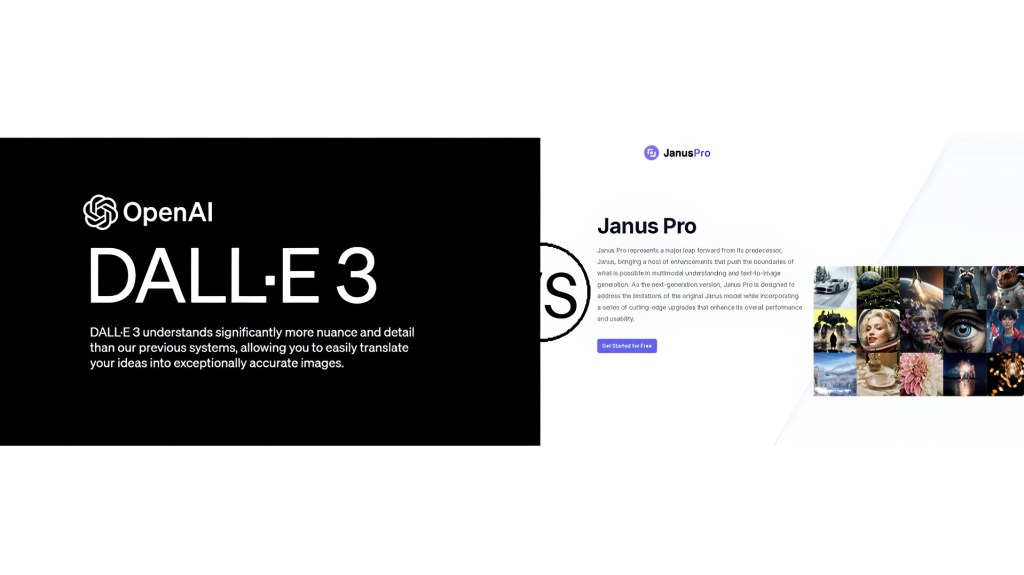
Image Source: AI Generated from Promeai.pro
DALL-E was the gold standard in AI image generation until now. Recent test results paint a different picture. Janus-Pro-7B now leads with 80% overall accuracy in text-to-image tasks, while DALL-E 3 trails at 67%. The results show Janus-Pro-7B’s excellence that spans multiple metrics, and it hits 99% accuracy in single-object generation compared to DALL-E 3’s 96%.
These aren’t mere numbers on a page – they mark a fundamental change in what AI can do with images. Janus-Pro-7B trained on 90 million new samples that include 72 million high-quality synthetic images. This training has led to better image stability and improved prompt alignment. The right tool choice matters a lot when you create content for e-commerce, marketing, or educational work.
Let’s get into how these two AI giants match up against each other. This will help you pick the best option that fits your image generation needs.
Understanding Image Generation Capabilities
Standard tests show the most important differences in how these AI models create images. Janus-Pro-7B shows better text-to-image accuracy with an 80% score in GenEval standards, compared to DALL-E 3’s 67%. The precision rate for single-object generation reaches 99% with Janus-Pro-7B, which beats DALL-E 3’s 96%.
Text-to-Image Accuracy
DPG-Bench tests highlight each model’s strength in handling complex prompts. Janus-Pro-7B earned an 84.19 overall performance score, slightly better than DALL-E 3’s 83.50. The attribute alignment score of 89.4% makes Janus-Pro-7B stand out, though DALL-E 3 leads in relation handling with 90.58%.
Style Control and Consistency
Both models shine in different stylistic areas. Janus-Pro-7B creates photorealistic outputs with fine details. DALL-E 3 produces creative and abstract designs with a polished look that works well for artistic projects.
Resolution and Quality Options
These models differ in their resolution capabilities. Advanced training lets Janus-Pro generate 768×768 pixel outputs. The model achieves this quality by training on 72 million high-quality synthetic images along with ground data. DALL-E 3 delivers consistent quality in images of all sizes and excels at human features and abstract concepts.
Industry-Specific Performance
AI models Janus-Pro and DALL-E show unique strengths in different industry applications. Janus-Pro’s open-source framework makes it more available to businesses of all sizes.
E-commerce Product Images
Janus-Pro creates photorealistic product visualizations with precise detail rendering. The model’s training on 72 million high-quality synthetic images, combined with real-life data, produces more stable and visually appealing product shots.
Marketing and Advertising
Text-to-image AI tools have revolutionized marketing campaigns. Heinz’s AI Ketchup campaign using DALL-E generated billions of impressions. These platforms help marketers to:
- Create campaign mock-ups quickly
- Generate diverse visual content faster
- Produce consistent brand imagery
Educational Content Creation
Janus-Pro’s decoupled architecture works exceptionally well for educational content and achieves superior performance in task comprehension. DALL-E 3 excels at creating imaginative visuals that improve learning materials. Educators can utilize both platforms’ strengths – Janus-Pro for technical illustrations and DALL-E 3 for abstract concept visualization.
Both platforms’ integration roadmap points to continuous improvements in industry-specific applications. Janus-Pro’s dedication to open-source development combined with DALL-E 3’s market presence creates healthy competition that benefits users in every sector.
User Experience Analysis
These AI platforms show unique approaches to user interaction in their interface design. DALL-E 3’s original design focused on accessibility with a straightforward interface that works well for users of all skill levels. We designed it to boost immediate productivity, and its efficient approach cuts down image generation time.
Interface and Ease of Use
DALL-E 3’s accessible interface puts simplicity first. Janus-Pro takes a different path with its technical interface through Hugging Face Spaces demo and Gradio-based local setup options. Users can choose between browser-based generation or local installation, thanks to this flexible setup.
Learning Curve Comparison
The learning path is different between these platforms. Users can start creating images with DALL-E 3 right away. Notwithstanding that, Janus-Pro needs users to understand its advanced features and targets those who feel comfortable with technical parameters. The platform’s customization options are:
- Local setup with Gradio-based GUI
- Browser-based generation through Hugging Face
- Fine-tuning capabilities to match specific domains
Output Customization Options
Janus-Pro gives users more technical control and supports fine-tuning with domain-specific datasets. The platform runs at a base resolution of 384×384 pixels and needs substantial computing power to perform well. Janus-Pro’s specialized datasets make it versatile in many languages, which helps users who need multilingual support.
Future Development and Potential
DeepSeek shows major advancements in image generation technology through its strategic approach to AI development. The company’s state-of-the-art methods shine through its sophisticated training methodologies and architectural improvements.
Upcoming Features
DeepSeek’s development roadmap aims to improve multimodal capabilities. The model’s architecture separates visual encoding for understanding and generation tasks and specializes in processing for each function. New versions will include an expanded dataset of 90 million samples that covers specialized content for MEME understanding and Chinese conversational contexts.
Scalability Considerations
The platform’s computational efficiency stands out with its innovative training methods. Janus-Pro achieves faster training and improved stability by using a 1:1 ratio of synthetic to real data. The system needs these requirements:
- High-end GPU infrastructure runs the 7B model
- Consumer-grade GPUs are enough for the 1B version
- VRAM supports live applications
Integration Roadmap
MIT license makes unrestricted commercial use possible and encourages widespread adoption in any discipline. DeepSeek’s focus on computationally efficient training techniques makes the platform ready for smooth integration into existing processes. The model can be fine-tuned using domain-specific datasets that expand its ground applications in a variety of sectors.
Comparison Table
| Feature | DALL-E 3 | Janus-Pro-7B |
|---|---|---|
| Overall Text-to-Image Accuracy | 67% | 80% |
| Single-Object Generation Accuracy | 96% | 99% |
| DPG-Bench Performance Score | 83.50 | 84.19 |
| Relation Handling | 90.58% | Not mentioned |
| Attribute Alignment | Not mentioned | 89.4% |
| Base Resolution | Not mentioned | 768×768 pixels |
| Stylistic Strength | Creative and abstract designs | Photorealistic outputs with intricate details |
| Interface Design | Easy-to-use and straightforward | Technical interface with Hugging Face Spaces demo |
| Target Users | All skill levels | Users comfortable with technical parameters |
| Training Dataset | Not mentioned | 90 million samples (72 million synthetic images) |
| License Type | Not mentioned | MIT license |
| Main Use Cases | Artistic projects, abstract concepts | Technical illustrations, product visualization |
Conclusion
AI image generation has seen a major move forward with the rivalry between DALL-E 3 and Janus-Pro-7B. Recent tests show Janus-Pro-7B outperforming DALL-E 3 with 80% accuracy versus 67%. Both platforms shine in different areas. Janus-Pro’s strength lies in photorealistic outputs and technical illustrations. DALL-E 3 excels at creative and abstract designs.
These platforms offer distinctly different user experiences. Beginners will appreciate DALL-E 3’s simple, straightforward approach. Janus-Pro’s advanced interface gives users more technical control. This makes DALL-E 3 perfect for quick creative work, while Janus-Pro suits those who need precise output control.
Both platforms show great promise ahead. Janus-Pro’s open-source foundation and massive training dataset of 90 million samples point to better image quality and accuracy. DALL-E 3’s market position drives steady progress in creative applications. You can track the latest AI image updates through our free newsletter.
Your specific needs should guide your platform choice. Janus-Pro works best for photorealistic product images and technical illustrations. DALL-E 3 might better serve those working on artistic projects. These tools are changing the digital world of AI image generation, each playing its unique role in content creation.
FAQs
What is Janus-Pro and how does it compare to DALL-E 3? Janus-Pro is an advanced AI image generation model that outperforms DALL-E 3 in overall text-to-image accuracy, scoring 80% compared to DALL-E 3’s 67%. It excels in photorealistic outputs and technical illustrations, while DALL-E 3 is better for creative and abstract designs.
How do the image generation capabilities of Janus-Pro and DALL-E 3 differ? Janus-Pro achieves 99% accuracy in single-object generation, surpassing DALL-E 3’s 96%. It specializes in photorealistic outputs with intricate details, while DALL-E 3 excels in creative and abstract designs with a more polished esthetic.
What are the main differences in user experience between Janus-Pro and DALL-E 3? DALL-E 3 offers a simple, intuitive interface suitable for users of all skill levels, making it ideal for quick creative projects. Janus-Pro provides a more technical interface with advanced customization options, catering to users comfortable with technical parameters.
How does Janus-Pro’s training data contribute to its performance? Janus-Pro was trained on 90 million samples, including 72 million high-quality synthetic images balanced with real-world data. This extensive dataset contributes to its superior performance in image stability and prompt alignment across various applications.
What are the future development prospects for Janus-Pro? Janus-Pro’s open-source nature and MIT license enable unrestricted commercial use and widespread adoption. Future iterations will focus on enhanced multimodal capabilities, expanded datasets, and improved computational efficiency, positioning it for seamless integration into various industries.



 PixelOne.AI
Leave a comment