
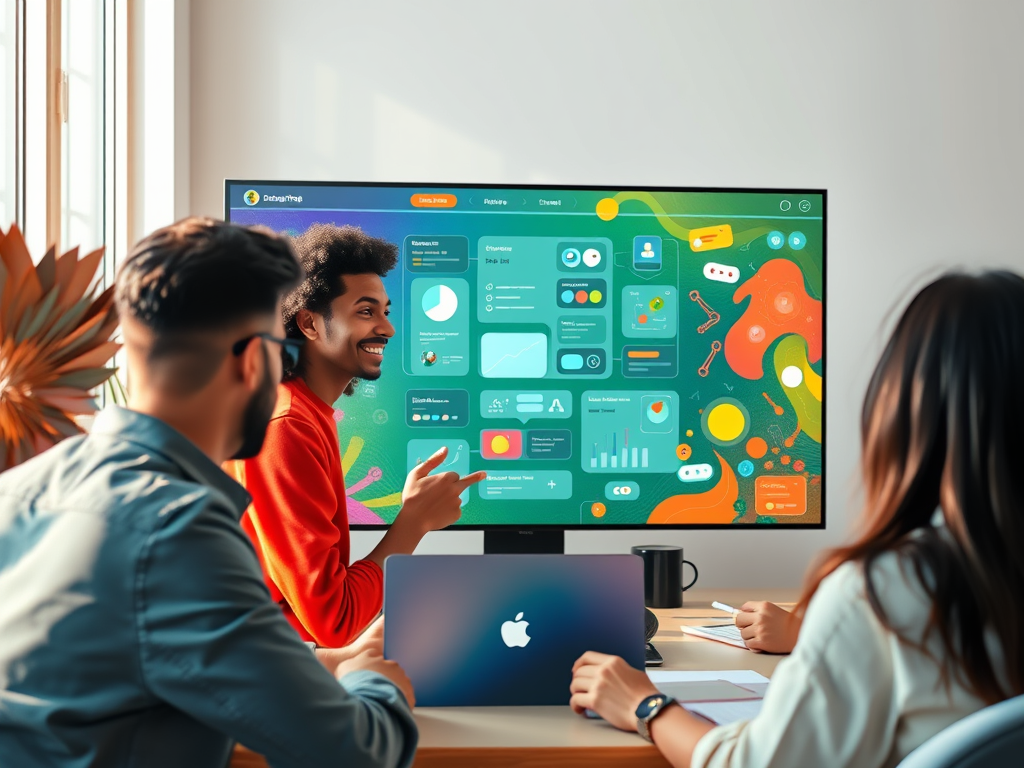
Are you tired of endless feedback loops and the chaos of conflicting design versions when working remotely? Imagine a world where your distributed creative team flows seamlessly, ideas evolve in real-time, and stakeholder feedback integrates effortlessly. Sounds like a dream? It’s closer than you think, thanks to the powerful combination of Figma and AI-driven visual technology like GPT-Image-1. At PixelOne.ai, we’re passionate about empowering creative teams like yours with cutting-edge AI tools that not only enhance your visuals but also revolutionize your collaborative design process. Let’s dive into how this synergy can transform your remote workflow.
The Remote Design Reality: Challenges and Bottlenecks
Working remotely offers incredible flexibility, but it also introduces unique hurdles for design teams. You might be nodding along if you’ve experienced:
- Version Control Nightmares: Sifting through multiple iterations, trying to figure out which is the latest, and the inevitable “oops, I was working on the old version” moments.
- Slow Feedback Cycles: The back-and-forth of sharing static mockups, waiting for email replies, and scheduling meetings can significantly delay projects.
- Misinterpretations and Lack of Clarity: Without the ability to point and discuss designs in person, nuances can get lost in translation, leading to rework.
- Scaling Creative Output: Meeting tight deadlines and producing high-quality visuals consistently can be challenging with limited resources and time.
These pain points don’t just impact efficiency; they can stifle creativity and strain team morale. But what if there was a way to bridge the distance and streamline your design process with the power of AI?
Figma: Your Collaborative Design Hub
Figma has already revolutionized how design teams collaborate. Its cloud-based platform allows multiple team members to work on the same design file simultaneously, regardless of their location. This real-time collaboration 1 eliminates the “pass-the-file” bottleneck and fosters a more dynamic creative environment. Key collaborative features in Figma include:
- Real-time Co-editing: Multiple users can edit the same file at the same time, seeing each other’s changes instantly.
- Shared Libraries and Components: Maintain design consistency across projects with easily accessible and updatable assets.
- Integrated Prototyping: Create interactive prototypes directly within Figma to test user flows and gather early feedback.
- Commenting and Annotation: Leave contextual feedback directly on the design, making communication clear and actionable.
However, even with Figma’s robust collaborative features, the creation and iteration of visual assets can still be time-consuming. This is where the intelligent power of AI visual technology steps in.
GPT-Image-1: Injecting AI Magic into Your Visual Workflow
Imagine having an AI assistant that can generate high-quality images based on your text prompts directly within your design workflow. That’s the potential of integrating tools like GPT-Image-1. While direct integration might be evolving, the concept of leveraging AI for visual generation offers significant advantages for remote teams:
- Rapid Concept Exploration: Quickly generate multiple visual concepts based on briefs or brainstorming sessions, allowing for faster exploration of ideas.
- Overcoming Creative Blocks: When inspiration runs dry, AI can provide novel visual starting points and spark new directions.
- Generating Diverse Assets: Create variations of images, illustrations, or textures quickly, saving valuable design time.
- Streamlining Mockup Creation: Populate mockups with realistic or stylized AI-generated imagery, accelerating the prototyping process.
PixelOne.ai is at the forefront of exploring and integrating such AI visual technologies to empower creative teams. We understand the nuances of visual quality and are dedicated to providing tools that not only generate images but also understand and respond to creative intent.
The Power Duo: Figma + AI – Solving Your Remote Design Pains
The synergy between Figma’s real-time collaboration and AI-powered visual generation can directly address the challenges faced by remote design teams:
Conquering Version Control Conflicts
- Figma’s Solution: Centralized cloud-based files ensure everyone is always working on the latest version. Real-time co-editing makes it immediately apparent when changes are being made.
- AI’s Contribution: By quickly generating and iterating on visual assets, AI can reduce the number of manual iterations and the potential for divergent versions. For example, instead of multiple designers creating different versions of an icon from scratch, a base can be generated by AI and then refined collaboratively in Figma.
Accelerating Stakeholder Feedback Loops
- Figma’s Solution: Integrated commenting and prototyping allow stakeholders to provide feedback directly within the design context. Real-time updates mean feedback can be addressed immediately.
- AI’s Contribution: AI can help generate visual variations based on initial feedback rapidly. Imagine a stakeholder suggesting a different color palette; AI could quickly produce several options that can be reviewed and discussed in Figma in real-time. This iterative process becomes significantly faster.
Enhancing Communication and Clarity
- Figma’s Solution: Shared canvases and real-time presence provide a virtual space for teams to discuss and iterate visually. Annotation tools allow for precise feedback.
- AI’s Contribution: AI can generate visuals that more accurately represent the intended concept, reducing ambiguity. For instance, a vague idea for a background image can be brought to life by AI, providing a clearer visual anchor for discussion within Figma.
Boosting Creative Output and Efficiency
- Figma’s Solution: Shared libraries and components streamline repetitive tasks, allowing designers to focus on more complex creative challenges.
- AI’s Contribution: AI can automate the creation of certain visual elements, freeing up designers’ time for higher-level strategic thinking and creative exploration. Generating initial image concepts or variations quickly with AI allows designers to iterate and refine within Figma more efficiently.
PixelOne.ai: Your Partner in AI-Powered Visual Innovation
At PixelOne.ai, we’re committed to making the power of AI visual technology accessible and practical for creative teams. We understand that it’s not just about generating images; it’s about enhancing your creative process, improving collaboration, and ultimately delivering exceptional results. We are actively exploring and developing solutions that integrate seamlessly with platforms like Figma to provide you with:
- Intelligent Image Generation: AI tools that understand your creative intent and produce high-quality visuals tailored to your needs.
- Seamless Workflow Integration: Solutions designed to fit into your existing design process, minimizing disruption and maximizing efficiency.
- Expert Guidance and Support: We provide the knowledge and resources you need to effectively leverage AI in your visual workflow.
Real-World Impact: A Glimpse into the Future
Consider a remote advertising agency working on a new campaign. Using Figma, the team collaborates on the layout and messaging in real-time. When they need visual assets, instead of waiting for a separate illustration process, they use an AI tool (envisioned as an advanced GPT-Image-1) to generate initial concepts based on the campaign’s themes. These AI-generated visuals are immediately imported into Figma, where the team can provide feedback and iterate on them collaboratively. Stakeholders can see the visuals in context within the design, leading to faster approvals and a more cohesive final product. Version control is seamless as all iterations happen within the central Figma file.
Getting Started: Embracing the AI-Powered Collaborative Future
The integration of AI into collaborative design workflows is not a distant dream; it’s happening now. Here are a few actionable steps your remote team or agency can take:
- Master Figma’s Collaborative Features: Ensure your team is fully leveraging the real-time editing, commenting, and prototyping capabilities of Figma.
- Explore AI Image Generation Tools: Familiarize yourself with the current landscape of AI image generation tools and their potential applications in your workflow. While direct Figma integration might be evolving, understanding the capabilities is key.
- Identify Pain Points: Pinpoint specific areas in your remote design process where AI-assisted visual creation could provide the most significant impact.
- Stay Informed with PixelOne.ai: Follow our insights and updates as we continue to develop and explore cutting-edge AI visual solutions for creative teams.
Conclusion: Designing Without Limits
The combination of Figma’s robust collaborative environment and the transformative power of AI visual technology like GPT-Image-1 offers a compelling vision for the future of remote design. By addressing key pain points like version control and delayed feedback, this synergy empowers distributed teams and agencies to work more efficiently, creatively, and collaboratively than ever before. PixelOne.ai is excited to be your partner in navigating this evolving landscape, providing you with the tools and knowledge to unlock the full potential of AI in your visual workflow. Embrace this future, and let’s design without limits.


 PixelOne.AI
Leave a comment